
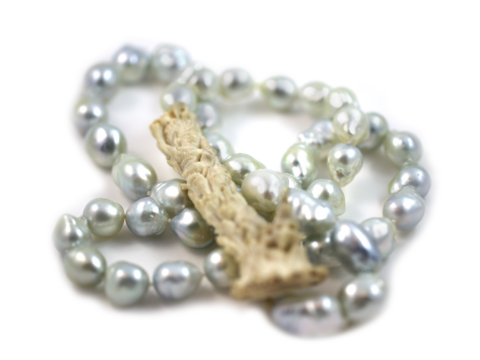
Bone and antler carry histories that extend far beyond adornment. Across cultures and centuries, these natural materials have been carved, shaped, preserved, and imbued with meaning. In the work of artist and jewelry designer Katey Brunini, they become part of a contemporary fine-jewelry language rooted in nature, symbolism, and transformation. For decades, K. Brunini Jewels has brought unexpected natural materials into conversation with gold, sterling silver, diamonds, pearls, opals, and rare gemstones. Bone and antler are part of that vocabulary: materials whose organic character, texture, and history challenge conventional definitions of what makes something precious.
Bone and antler possess qualities unlike precious metals or gemstones. Their color, texture, density, and natural variation carry evidence of their organic origins, and K. Brunini’s work allows these qualities to remain part of the identity of the work. Carved antler and bone can appear alongside gold, diamonds, pearls, and gemstones, creating the tension between raw and refined that has long characterized Katey Brunini’s design language. The contrast invites materials traditionally considered precious and those drawn directly from the natural world to occupy the same space. In doing so, the value of a piece extends beyond the conventional hierarchy of its materials to include craftsmanship, meaning, history, and artistic expression.
Katey Brunini explored the cultural and symbolic history of horn extensively through Cornuti, a body of work presented at Lux Art Institute in 2010. The work incorporated materials including water buffalo horn, cow and goat horn, fossilized walrus tusk, and deer antler while exploring the role of horn throughout history, mythology, and culture. The Italian cornuto and horn-shaped amulets have carried associations with protection, fertility, superstition, sexuality, and power. In Brunini’s interpretation, the physical material and the meanings humans have attached to it become inseparable. This approach reflects a larger theme throughout K. Brunini Jewels: materials are selected for the stories, symbols, and natural histories they carry, instead of being selected purely for appearances.
Bone and antler also appear throughout Katey Brunini’s broader exploration of nature and anatomy. The Shapes of Strength collection draws from structures including twigs, vertebrae, DNA, spider webs, animals, and protective forms. Within this body of work, natural materials reinforce the connection between the physical world and the forms that inspire the jewelry. In the Body Armor collection, for example, carved antler appeared within jewelry conceived around protection, strength, and survival. Elsewhere, carved antler has been incorporated into DNA-inspired designs, connecting a material produced by nature with forms representing the biological structures of life. The result is jewelry in which material and meaning continually inform one another.
The use of bone and antler in adornment predates the modern concept of fine jewelry. Their presence in contemporary work creates a connection between ancient forms of personal expression and modern craftsmanship. That relationship between past and present is central to Brunini’s approach. Natural materials may carry evidence of another life or another time, while precious metals and gemstones place them within a contemporary fine-jewelry setting. The resulting pieces exist between worlds: ancient and modern, organic and crafted, familiar and unexpected. These contrasts aren’t contradictions looking for a resolution. Instead, K. Brunini intentionally brings light to them, giving the jewelry its undeniable character.
What makes a material precious?
Traditional fine jewelry often answers that question through rarity, monetary value, or permanence. K. Brunini’s work offers a broader interpretation. A material may become precious because of its natural history, what it symbolizes, the craftsmanship required to transform it, or the relationship a wearer develops with a finished piece. Bone and antler make that question visible: Placed alongside diamonds, pearls, gemstones, and precious metals, these organic materials invite the wearer to reconsider where value resides. They also invite the wearer to think about how nature, craftsmanship, and human meaning can transform material into art.
Yes. Bone can be carved and incorporated into fine jewelry alongside precious metals, diamonds, pearls, opals, and other gemstones. Katey Brunini has used bone throughout her work as part of a broader exploration of natural materials and the contrast between raw and refined.
Yes. Antler can be carved and combined with traditional fine-jewelry materials. K. Brunini has incorporated deer and moose antler into jewelry, including work associated with Cornuti, Body Armor, and the broader Shapes of Strength collections.
Bone and antler connect several recurring ideas in Katey Brunini’s work: nature, anatomy, history, symbolism, transformation, and the relationship between organic and precious materials. Their natural character also creates contrast when paired with materials such as gold, diamonds, pearls, and gemstones.
Preciousness in jewelry can extend beyond the monetary value of a material. Bone and antler carry natural histories, distinctive textures, and cultural associations that can gain new meaning through carving, craftsmanship, artistic intention, and their relationship with precious metals and gemstones.